Best Time to Pour Concrete in Dallas GA: Seasonal Guide
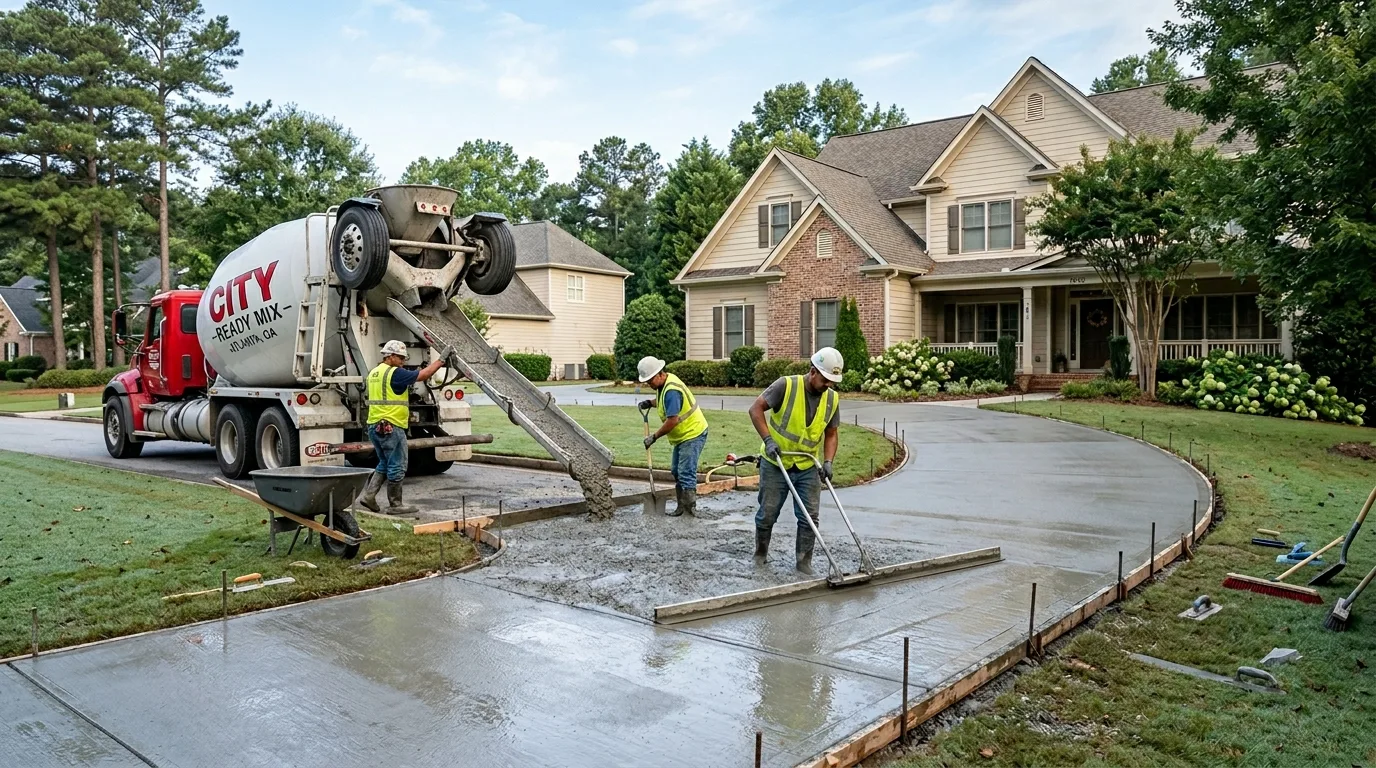
Timing a concrete project in Dallas, GA isn’t just about contractor availability — it directly affects how well the concrete cures and how long it lasts. Georgia’s humid subtropical climate creates very different curing conditions across the four seasons, and the choices you make about scheduling affect your slab’s final strength and surface quality. This guide breaks down each season for concrete work in Paulding County.
In this post, we cover: the best and worst seasons for concrete in Dallas, GA, what happens when concrete is poured in extreme heat or cold, how to schedule your project for the best outcome, and how seasonal demand affects pricing and availability.
Schedule Your Concrete Project in Dallas, GA
Dallas Concrete installs concrete year-round — we know how to work with every season Georgia brings. Call (888) 376-0955.
Why Season Matters More in Georgia Than Most States
Concrete cures best at temperatures between 50°F and 80°F. In Dallas, GA, that range doesn’t exist in July or January — summer averages reach 87°F in July, and winter brings overnight lows that drop below 32°F from December through February. Georgia’s average annual rainfall of about 52 inches, distributed fairly evenly through the year, adds another variable: rain immediately after a pour can disrupt surface texture, while extended dry heat causes rapid moisture loss that weakens the slab surface.
Paulding County’s expansive red clay soil adds one more consideration: soil moisture levels change with Georgia’s seasons, affecting how stable the sub-base is at the time of the pour.
Spring (March–May): The Best Season for Concrete in Dallas GA
Spring is the most reliable window for concrete work in Dallas, GA. March through May brings average highs of 60–75°F, consistent mild temperatures, and moderate humidity — ideal conditions for concrete curing. The concrete sets at a rate that allows proper hydration and full strength development without the rapid moisture loss that summer heat causes.
Spring also provides good soil conditions: the winter freeze cycle has stabilized, and soil moisture levels are manageable before the heavy May and June rains saturate Paulding County’s clay. Seven Hills and Savannah Lakes homeowners who want to have their driveways or patios ready for summer use typically schedule spring pours to have the slab fully cured well before July.
The tradeoff: spring is contractor busy season in Dallas, GA. Schedule early — waiting until April to book a March-window project may push you into summer.
Summer (June–August): The Most Challenging Season
Summer in Dallas, GA is the most difficult season for exterior concrete work. July averages a high of 87°F, with surface temperatures on sunlit concrete reaching 120–130°F. At those temperatures, moisture evaporates from the concrete surface faster than the hydration reaction can consume it, creating a phenomenon called plastic shrinkage cracking — fine cracks that form on the surface before the concrete even fully sets.
This doesn’t mean summer concrete work is impossible — it means it requires adaptations:
Early morning pours: Starting at 5–6am allows the concrete to be placed, finished, and covered before peak afternoon heat. Experienced Dallas, GA contractors schedule summer pours to be complete before noon.
Evaporation retarder: A chemical retarder sprayed on the surface slows moisture loss during finishing, giving the crew more working time.
Wet burlap and polyethylene: Covering the slab immediately after finishing and keeping it moist for 7 days prevents surface drying during Georgia’s hottest weeks.
Summer concrete in Paulding County can be high quality when properly managed — but it requires a crew that knows how to work in Georgia’s heat, not one that treats every pour the same regardless of temperature.
Types of Summer Concrete Decisions in Dallas GA
Time-sensitive projects: If you need a driveway poured before a property sale or a patio ready for a summer event, summer pours are feasible with proper crew scheduling. Communicate the timeline clearly to your contractor.
Decorative/stamped concrete: Summer is the most challenging season for stamped concrete. The narrow window between pour and set leaves less time for stamping. Fall is strongly preferred for stamped projects in Dallas, GA.
Plain driveways: A standard broom-finish driveway poured in summer by an experienced crew with proper curing protocol will perform as well as any other season’s work. The risk is manageable with the right precautions.
Fall (September–November): The Second-Best Season
Fall is many experienced concrete contractors’ preferred season in Dallas, GA. Temperatures drop from summer’s high 80s to consistent highs of 65–75°F in September and October, with lower humidity than spring. Fewer rain events and more consecutive dry days make scheduling more reliable.
Stamped concrete projects are best scheduled in fall — cooler temperatures extend the working window before the concrete sets, giving stamping crews more time to achieve clean, detailed impressions without rushing. Homeowners in Pickens Bluff and Riverwood who want decorative concrete should target September and October for the optimal result.
Fall is also a good time for concrete repair: fall’s dry conditions and mild temperatures allow repair mortars and overlay products to cure properly, and the window before winter’s freeze risk gives repairs time to fully harden before any cold snaps arrive in Dallas.
Practical Uses: Seasonal Scheduling for Different Concrete Projects
- Driveways: Best in spring or fall. Summer works with proper precautions. Winter requires insulated blankets.
- Patios: Same as driveways, with stamped concrete strongly preferring fall.
- Foundation repair: Fall is best — lower soil moisture and mild temperatures make excavation easier and concrete placement more predictable.
- Commercial concrete: Fall is preferred for large commercial projects to minimize business disruption and ensure optimal curing conditions for thick commercial slabs.
- Concrete repair: Can be done year-round in Dallas, GA for crack fills; resurfacing overlays benefit from spring or fall scheduling.
Ready to Schedule Your Dallas, GA Concrete Project?
Dallas Concrete works year-round with season-appropriate techniques. Call (888) 376-0955 to book your fall or spring project.
Winter (December–February): Feasible With Precautions
Dallas, GA doesn’t experience the severe winters of northern states, but December through February brings overnight lows that regularly drop below 40°F and occasional freezes below 32°F. Concrete placed when temperatures are expected to fall below 40°F within 24 hours requires protection:
Insulating blankets: Curing blankets trap heat from the concrete’s exothermic hydration reaction, keeping the slab warm enough to cure properly overnight.
Accelerated mixes: Concrete mix designs with accelerated set time (higher cement content, Type III cement, or calcium chloride admixture) can be used to shorten the vulnerable early curing window in cold weather.
Heating: In severe cold (below 20°F), which is rare in Dallas but possible, temporary heating may be required. Georgia’s winters rarely reach this extreme.
Winter concrete work in Paulding County is more expensive due to the additional protective measures required. For non-urgent projects, spring or fall scheduling is more cost-effective. For urgent projects — a damaged driveway that needs replacement before a sale, for example — winter work is absolutely feasible.
Frequently Asked Questions
When is the cheapest time to pour concrete in Dallas GA?
Late fall and winter typically have lower contractor demand in Dallas, GA, which can translate to shorter wait times and sometimes better pricing. Spring and summer are peak season — contractors are busiest and lead times are longest. If your project timeline is flexible, November through February often offers the best contractor availability.
How hot is too hot to pour concrete in Dallas, GA?
When air temperatures exceed 90°F (common in July and August), additional precautions are required: early morning pours, evaporation retarder, and aggressive curing. When temperatures exceed 95°F, standard broom-finish work is manageable but decorative/stamped work becomes significantly more difficult. Most experienced Dallas, GA contractors avoid stamped pours when temperatures are above 90°F.
How cold is too cold for concrete in Dallas, GA?
Concrete should not be poured when temperatures are expected to fall below 40°F without protective measures. Below 32°F, water in fresh concrete can freeze before it hydrates, permanently weakening the slab. In Dallas, GA, this risk exists from December through February. Insulating blankets and accelerated concrete mixes address this effectively for temperatures down to about 25°F, which covers the vast majority of Dallas’s winter cold snaps. See our concrete driveway cost guide for how season affects overall project planning.
Dallas Concrete — Ready for Any Season in Paulding County
We use season-appropriate techniques to deliver quality concrete year-round. Call (888) 376-0955 for your free estimate.
Related: